


DIY or Call a Pro? What a Licensed, Insured Professional Gets You, and When It’s Fine to Do It Yourself
We know how it goes: You have a home project to do.
It’s not something you’re super familiar with, but you’ve watched a video tutorial twice, you own the tools, and the whole thing looks like a fairly simple Saturday morning job.
Some of the time, it does just turn out to be a fairly simple Saturday morning job. The internet has put real home-maintenance knowledge in front of anyone who wants it, and many homeowners across the Twin Cities handle plenty of projects on their own, really well, every week.
There are also those times when it’s not so simple. Maybe the job requires specialized equipment or specialized skills. Maybe it’s dealing with dangerous stuff. Maybe renting or buying the tools ends up making it more expensive. Maybe a Saturday morning turns into a month of Saturday mornings. And Monday nights. And Friday afternoons. And maybe the “simple” fix ended up causing more problems than it was supposed to solve.
How are you supposed to know when to DIY and when to call a pro?
If the worst possible outcome is a wet towel and a second trip to the hardware store, it’s probably a good candidate. A few examples motivated homeowners commonly take on:
- Swapping a showerhead or faucet aerator
- Replacing a toilet flapper or fill valve
- Changing your furnace filter
- Clearing a slow bathroom drain with a hand tool (please skip the caustic chemicals)
- Re-caulking around a tub or sink
- Resetting a tripped breaker and testing your GFCI outlets
None of these involve gas, hidden wiring, or your home’s structure, and none of them will keep getting sneakily worse behind a wall if you get a step wrong.
It’s not just about skill sets…
If you’re debating DIY, the question you’re asking is probably about whether you can realistically pull off the job. The more useful question is what happens if the job fails in six months. (Eek!) A tutorial shows you the steps, but it doesn’t stand behind them. In fact, most legitimate DIY videos make very clear disclaimers about that. That difference—between doing the work and being responsible for the work—is a lot of what you’re paying for when you hire a pro.
Accountability (a.k.a., who’s on the hook when it fails?)

When a licensed, insured professional (like the technicians at Bonfe) does the work, there’s a company to call, a license on the line, and insurance behind it. If a repair fails, the fix is the pro’s problem, not yours.
When you do it yourself, you are the warranty. And a friend-of-a-friend handyman with no license or insurance leaves you in the same place, except you’ve already paid once.
Minnesota’s rules don’t mess around here: a homeowner may do electrical work on a single-family home they own and live in, but only with a permit, only if they personally do the work, and only after an inspection before the wiring is used. That exemption doesn’t extend to a buddy with a truck.
Code compliance and peace of mind
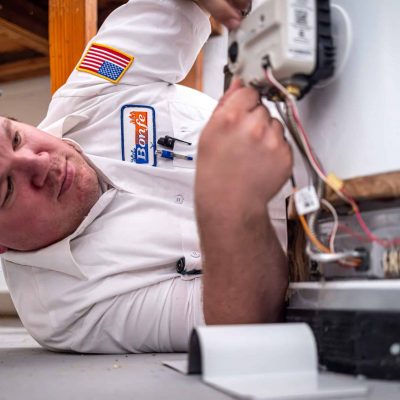
“Done to code” sounds like annoying paperwork, but it’s really a checklist of the ways things have gone wrong before. Code is what tells you how far a gas appliance sits from combustibles, which circuits need arc-fault or ground-fault protection, and where a shutoff has to be. A pro works from that list every day. A tutorial made in another state, under another code, may not.
In case you’re just thinking “but I’m not planning on an inspection” (did we just read your mind?), code matters beyond passing inspection, too. Unpermitted or off-code work can come up when you sell and a buyer’s inspector takes a look, and it can come up with your insurer after a claim. How your own policy treats it depends on the policy, which is worth reading before you open a wall. Don’t cut corners on permits or inspections.
Safety First (Seriously!)
No need to be dramatic about this. Most DIY projects don’t end in disaster. But there are three areas where even the most experienced professionals are sticklers about safety. In these categories, the failure points aren’t visible until something goes wrong. And if something goes wrong, it tends to go really wrong.
- Gas lines
A fitting that’s slightly loose can leak slowly and invisibly, which is why gas work gets pressure-tested before it’s called finished. - Electrical
According to the Electrical Safety Foundation International, arcing faults alone are “responsible for starting more than 28,000 home fires, killing and injuring hundreds of people, and causing over $700 million in property damage.” Oh, and that’s per year. - Structural
Anything load-bearing, or anything that changes how a load gets to the ground, is a job for someone who can calculate it, not eyeball it.
The Warranty Matters
Here’s the upshot of “what a pro gets you.” We can only speak for ourselves at Bonfe, but around here, repairs and installations we recommend and perform are covered by our Lifetime Parts & Labor Warranty for as long as you live in the home. If a part fails or the work doesn’t hold up, we come back and make it right. That means that for as long as you live in your home and maintain your equipment, all you’ll ever pay for a repair or replacement on it is our standard $99 diagnostic charge.
Compare that to the DIY version, where a failed repair means a second, bigger repair at full price, or the unlicensed-handyman version, where the number you call may no longer answer.
As you can probably imagine, not all pros have the same level of quality or integrity. If you don’t choose to work with us, no hard feelings—but please, for the sake of yourself and your family, do your due diligence before hiring.
A Quick Reference for DIY vs. Pro
Probably fine to DIY:
- Plumbing: showerheads, aerators, toilet flappers, drain hair catchers
- Electrical: bulbs, cover plates, resetting breakers, testing GFCIs
- HVAC: furnace filters, clearing leaves and debris from around the outdoor A/C unit, thermostat settings
Call a pro:
- Plumbing: water heater replacement, anything on a gas line, main shutoff valves, sewer or drain lines behind walls or under floors
- Electrical: panel work, new circuits, EV charger installation, anything that requires opening a wall
- HVAC: furnace or boiler repair, refrigerant, gas valves, any new equipment installation
Why Bonfe?
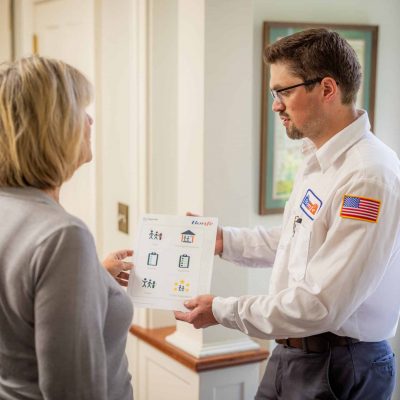
- Lifetime Parts & Labor Warranty
- Skilled, licensed technicians
- Quality workmanship
- Upfront pricing, with no surprises once the job starts
- 4.8 stars from over 11,500 Google reviews
- 100% family-owned since 1993
- Regular rates from 7am to 10pm, 7 days a week
- 24/7/365 emergency service for after-hours issues
A Low-Pressure Place to Start
If you’ve already got some DIY work in your house and you’re wondering whether it’s up to code, an electrical safety inspection or a professional plumbing inspection is a good place to start. No project required, no pressure.